What cuts do you get from a half or quarter beef?
Chuck to shank: what each part of the animal becomes, which cuts are steaks, why so much of it is ground beef, and what we would put on our own cut sheet.
Last updated August 2026
People picture a half beef as a freezer of ribeyes. A real animal is a different shape than that, and knowing the shape is what makes your cut sheet good.
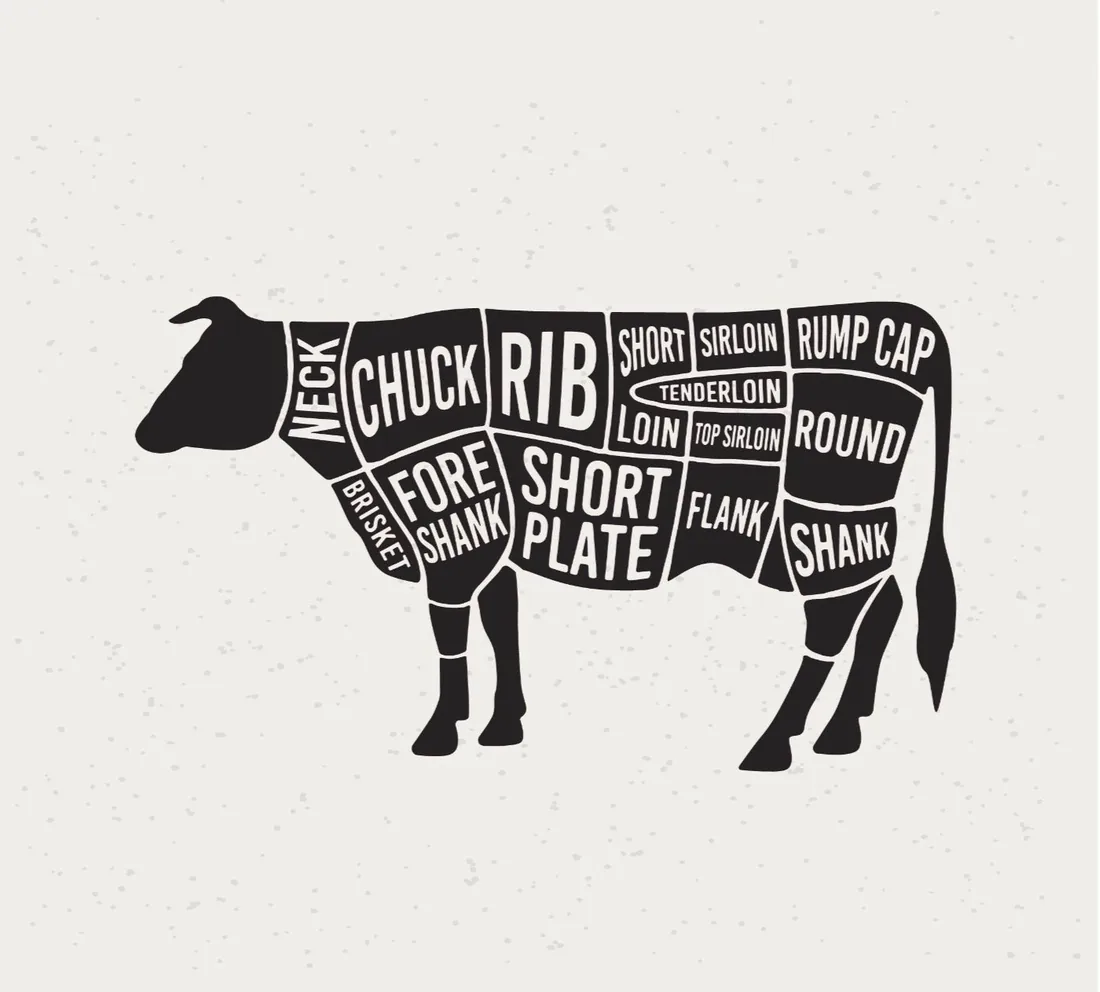
The front: long-cook country
- Chuck. The shoulder. Chuck roasts, chuck steaks, and a great deal of the ground beef. Hardworking muscle, heavy on connective tissue, superb when cooked low and slow.
- Brisket. The chest. Two per animal. In Texas this is not a cut, it is a religion. Take it whole if you smoke; grind it if you do not.
- Short ribs. Rich, fatty, and outstanding braised or smoked.
- Fore shank. Soup bones and osso buco. Nothing better for stock.
The middle: where the steaks live
- Rib. Ribeyes, bone-in and boneless, and standing rib roast. The most marbled section of the animal and the reason grain finishing matters.
- Short loin. T-bones and porterhouse — or New York strips plus a whole tenderloin. One or the other, never both. This is the biggest decision on your cut sheet.
- Short plate and flank. Skirt and flank steak — thin, intensely beefy, made for high heat and a sharp knife across the grain. Fajitas came from here.
The back: roasts, and a lot of ground
- Sirloin. Top sirloin steaks and tri-tip. Leaner than ribeye, excellent value, the workhorse steak of a well-planned freezer.
- Round. Rump roast, top and bottom round, eye of round. Very lean. Great for roast beef and jerky, unforgiving if overcooked. Many buyers grind most of it.
- Rear shank. More stock bones, more osso buco.
And the ground beef
Trim from every primal goes into the grind, plus whatever roasts you choose to convert. Ground beef is reliably the largest single category in a bulk beef order, and the one people are most glad they took extra of. Standard fat ratio is 80/20 and it is standard because it works.
The honest proportion: a beef animal yields a modest amount of premium steak, a larger block of roasts, and a great deal of ground. Any seller implying otherwise is describing a box they assembled, not an animal they raised.
What we would take, if you asked us
- Ribeyes at one inch, two to a pack.
- T-bones over strips, if you cook over fire.
- One brisket whole, even if you have never smoked one. Learn on your own beef.
- Chuck roasts at three pounds, and fewer round roasts than you think.
- Grind the rest. Nobody has ever complained about too much ground beef.
- A few soup bones. Not all of them — they are heavy.
Common questions
What cuts do you get from a quarter cow?
Which cuts are the steaks?
Where does brisket come from?
Why is so much of it ground beef?
Talk to the ranch
Questions this page didn't answer?
Call the ranch. We would rather spend ten minutes on the phone than have you guess.
(214) 202-1855Monday–Thursday, 10am–2pm · Call or text